
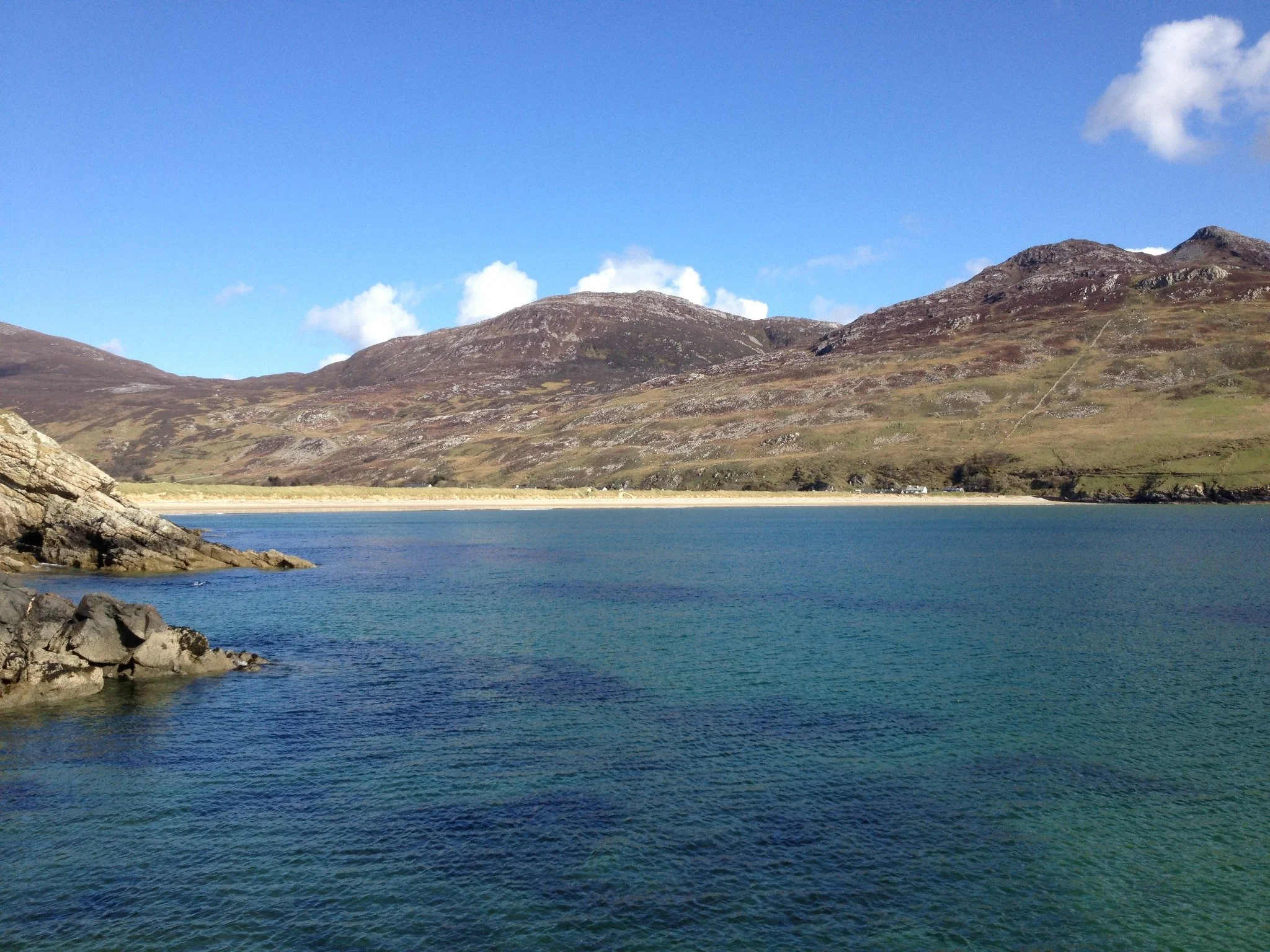
A local story of a mother taken from Urris, Co. Donegal, a remote rural location on the Inishowen Peninsula at the northern tip of Ireland. The tale of her kidnap is memorialised in a local song and this article preserves her memory and the Clonmany family who passed it on.
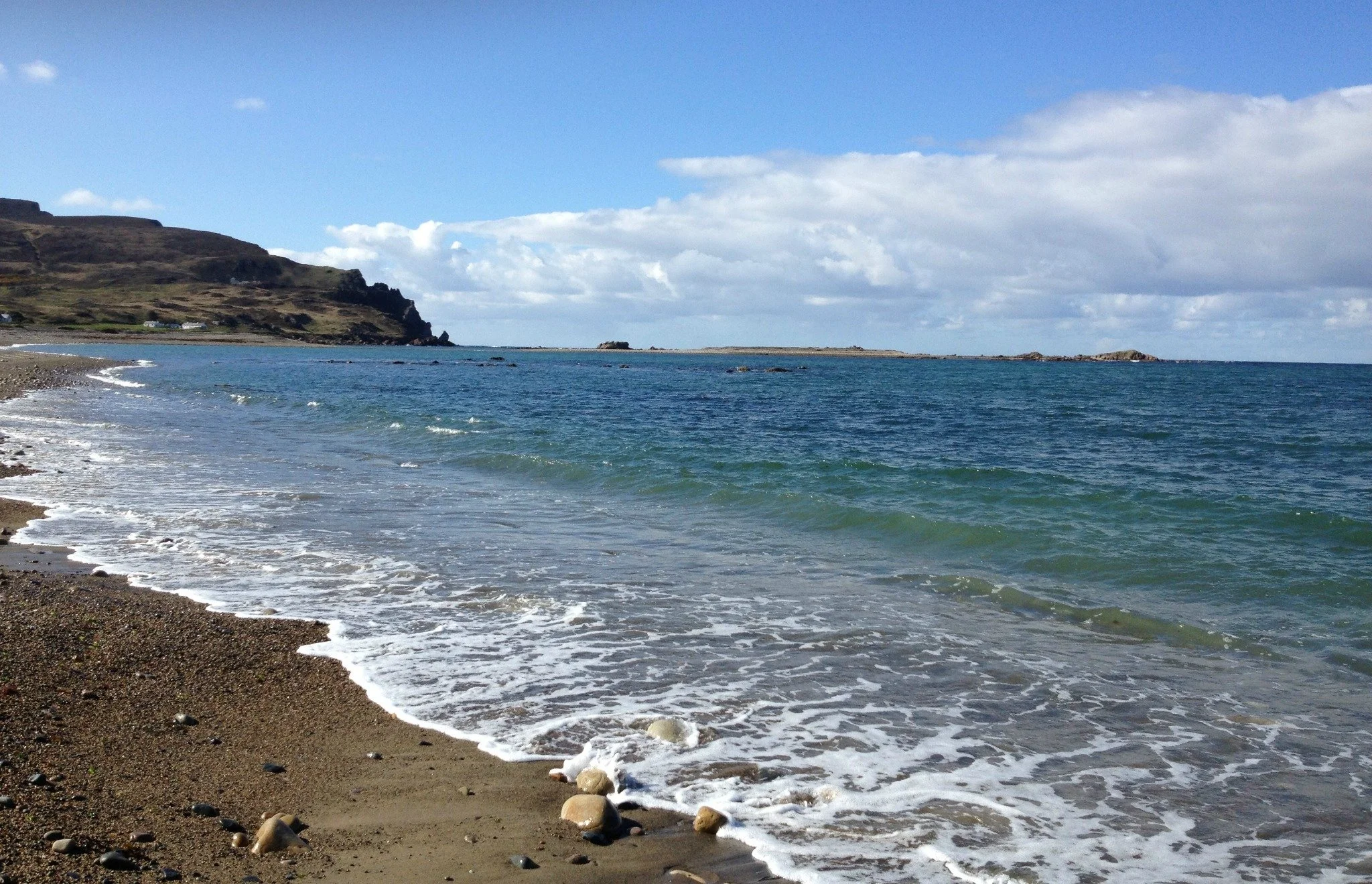
There is a story from Urris that I would like to share again. It concerns a young mother taken from near Lenan Bay, the children she left behind, and a song through which her story was remembered in Clonmany.
I first wrote about it in 2018. Returning to it now, I have found other accounts of piracy along the Donegal coast which help us to understand the wider setting. The local story itself comes to us through oral tradition, recorded many years after the events it describes. We have no date for the kidnapping and no name for the woman, but we do know who passed the story on.
Pirates on the Donegal coast
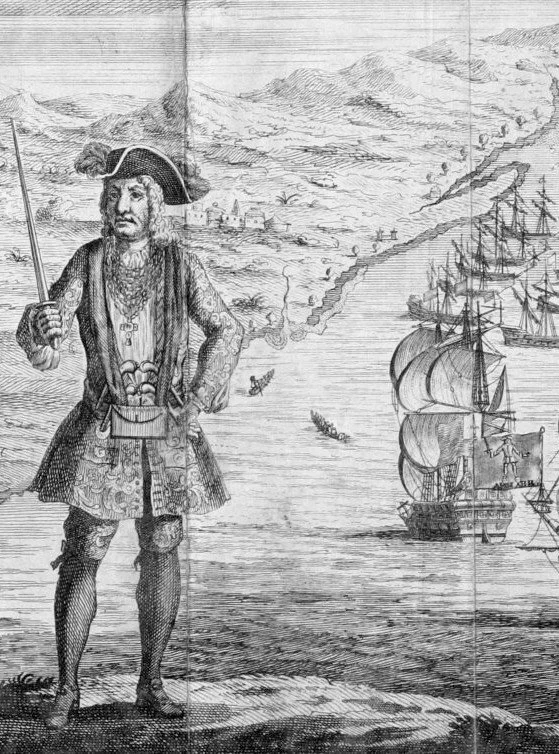
During the late sixteenth and early seventeenth centuries, piracy caused considerable trouble around Ireland. Ships carrying goods and provisions offered rich pickings, while sheltered harbours gave raiders somewhere to anchor, obtain supplies and dispose of stolen cargo. Donegal had its share of these visitors.
Richard Bagwell, in Ireland under the Stuarts, records an incident in 1614 involving a Chester vessel stolen while lying off Dalkey. The pirates brought her to Lough Swilly, where three of them were captured with the help of a man described as “bishop O’Coffie”. Bagwell was uncertain about his precise church office. The three pirates were subsequently executed near Dublin.
There is another Donegal connection in the story of Henry Every, also known as Avery. In June 1696, he landed at Dunfanaghy after a voyage from the Bahamas. John Dann, one of his companions, later described their arrival in an examination taken that August. He also alleged that a customs officer accepted gold to allow members of the party to continue on their way. It is an account that brings Dunfanaghy, Letterkenny and St Johnston into a much wider story of piracy and stolen wealth.
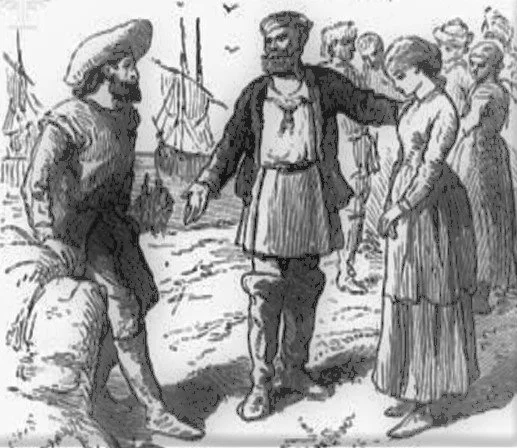
In my original research, I drew on the work of historian Dr John C. Appleby. His account of the difficulties faced by Lord Deputy Sir Arthur Chichester gives some idea of how hard piracy was to contain:
“Although Chichester was determined to promote the plantation of Ireland, at times he was almost overwhelmed by the problem of piracy. In a revealing insight into the limitations of an expanding English state, the Lord Deputy was forced into negotiations with pirate captains, despite his own dislike for such a policy: ‘I thought it no good husbandry nor service for the Kind to make such Capitulations with Pirates, since His Majesty was driven to make reparation of their misdeeds daily, and yet Piracy increased or continued nevertheless’.”
These accounts establish that pirates operated in Donegal waters. The stories of people taken from the shore require their own careful reading, particularly where our evidence survives in songs and family recollections.
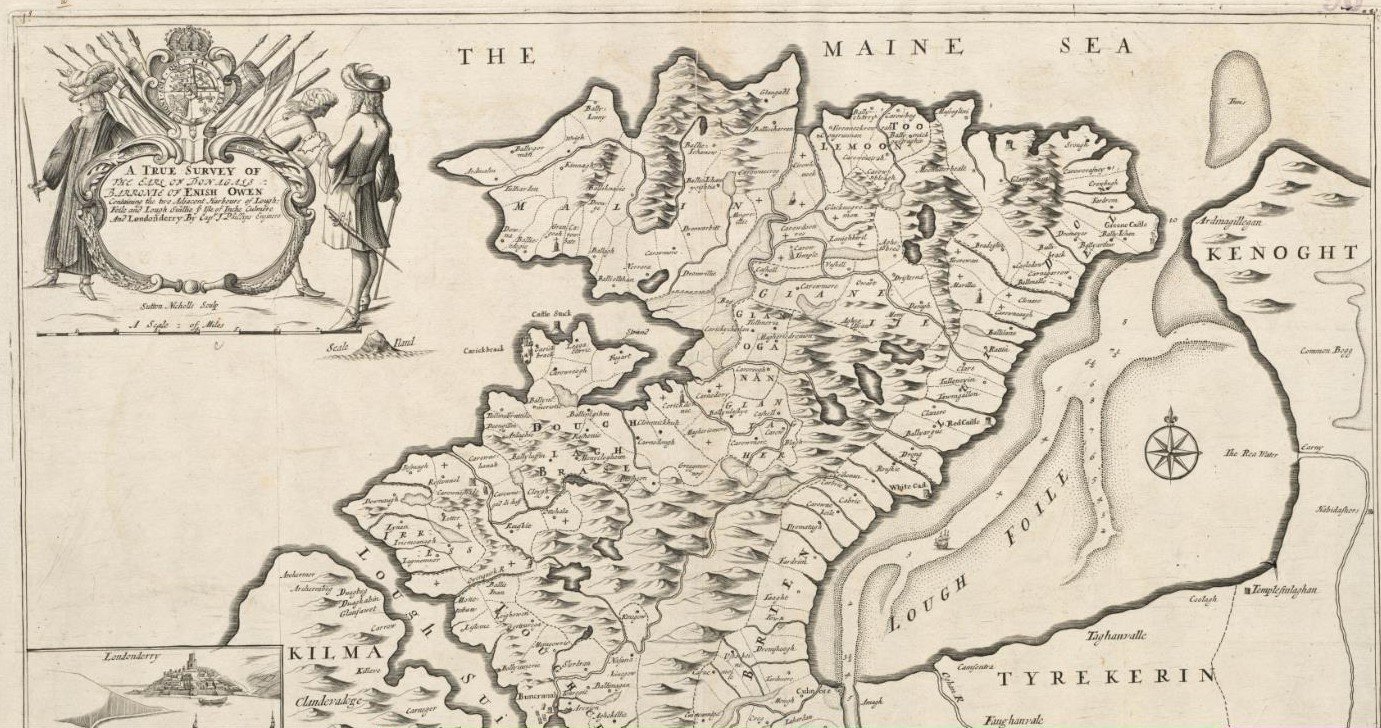
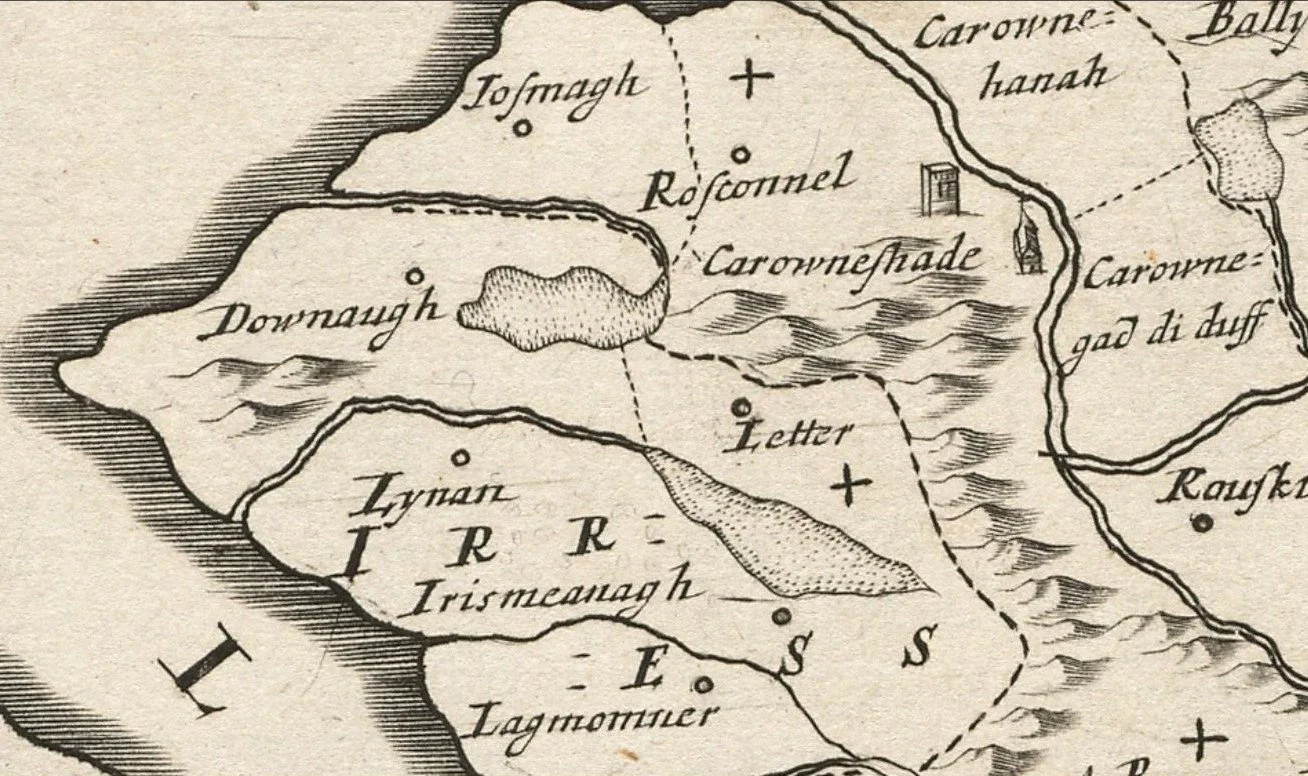
Taken from the waters off Dunaff
Charles McGlinchey gives us a very personal account of men being taken at sea in The Last of the Name. He recalled how his maternal grandfather and other Urris fishermen were forced into naval service during the Napoleonic Wars. This was press-ganging by the navy, a different practice from piracy, but it belongs in the story of how vulnerable local fishing families could be to events beyond their control.
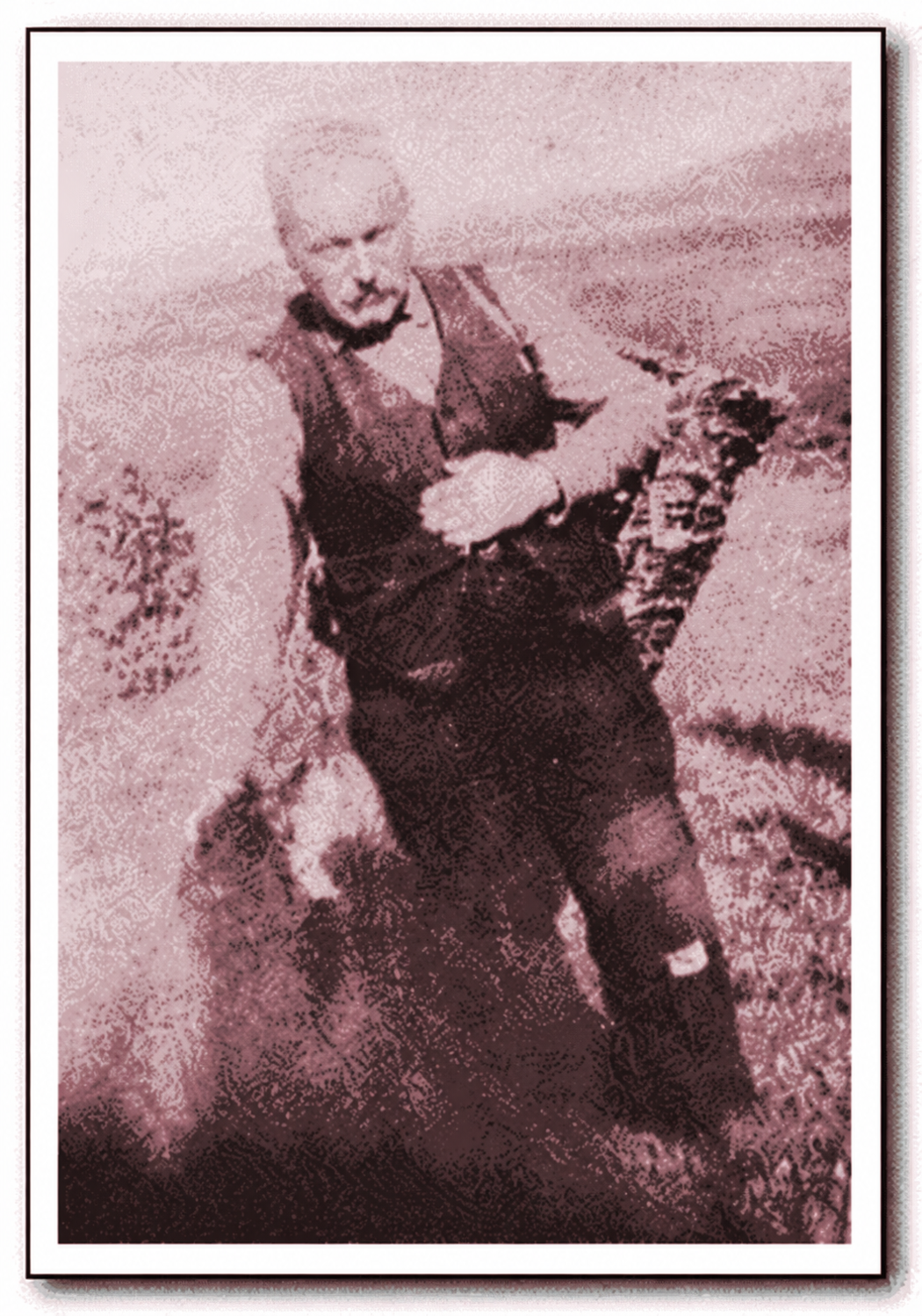
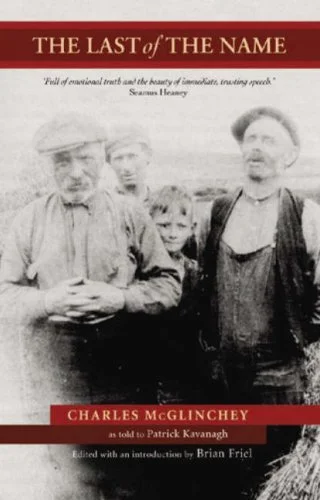
McGlinchey tells it in his own words:
“Her father, Seárlas, was born in the year of 1780. I was called after him. One night in the harvest-time of 1812, a boat crew were out fishing behind Dunaff. My grandfather and his two brothers and a lot more from Urris were in it. The wars of Napoleon were on at that time, and a ship of the English navy came close up to the Urris boat. Soon they saw a boat pulling out from the man-o’-war and drawing towards them. The crew fell to the oars then and were leaving them miles behind when the navy men opened fire on them, and sent a shot through the side of the boat, so they had to put up the oars and give in. They were taken then and pressed into service with the navy, all but a couple of nachlats (runts) of men that weren’t worth taking, and they were allowed to take home the boat. My grandfather and two granduncles were taken, a relation of their, Donal O Dubhaigh, and whatever others happened to be in the crew. Anybody caught on the water (at) that time was pressed.
They were taken to Dublin and enrolled there and spent three years at sea in different parts, but their ship never took part in any of the fighting. They were treated well enough and got a pound of beef every day and a ration of rum.
Flogging was common on-board ship in those days, and I’m told men were flogged to death many a time. There was one-time Donal O Dubhaigh was to be flogged for something he did, but Donal always passed for sort of a cluasán (blockhead, stupid person) and some of the headsmen let him off.
They got pay of some sort and a thing called result money, but they didn’t get the result money till long after they came home. When the war was over, they were set free in Dublin and came home with £20 apiece of navy money with them”.
The men in McGlinchey’s account eventually came home. For the families waiting in Urris, their absence must have been a considerable worry, even though we are told little about those left behind.
Across the Atlantic
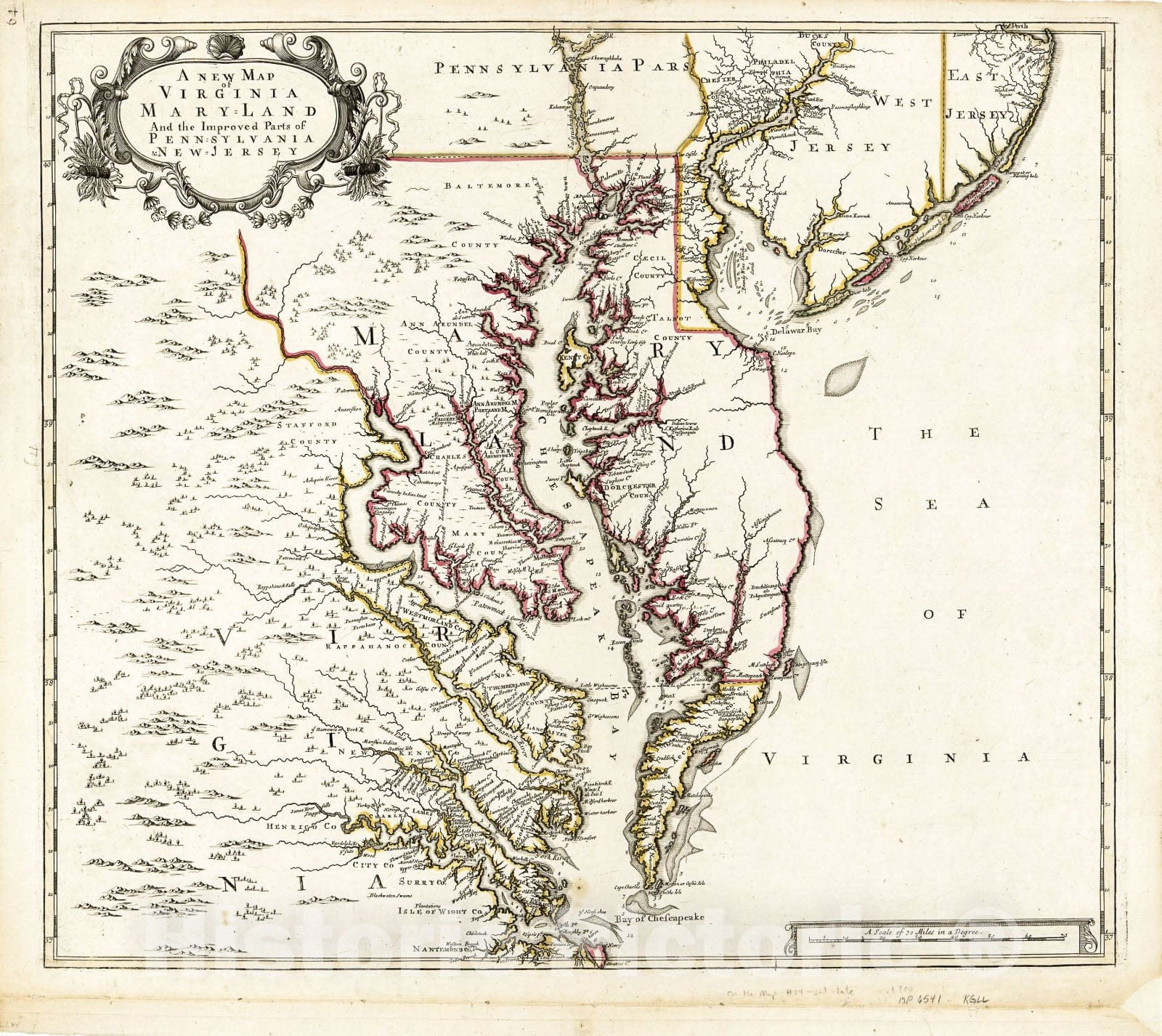
The question of people being taken overseas also led me to records of Irish indentured servants in the American colonies. Indenture usually bound a person to work for a stated term. Some people entered agreements to pay for their passage, while others experienced coercion or forced transportation. These different circumstances need to be considered individually. Indentured servitude and lifelong hereditary slavery were distinct systems, although indentured servants could suffer severe exploitation.
Lough Swilly also features in accounts of migration to America. An account entitled The Voyage of the Walpole describes one such journey in 1738:
“Patton sailed from Whitehaven, England in Walter Lutwidge’s ship Walpole on March 16, 1737/8. The ship lay some weeks in Dublin, taking on passengers and indentured servants. One of these indentured servants was Peter Burke who signed an indenture paper with Patton in Dublin on April 28, 1738.
Sometime after April 28, the Walpole set sail for Lough Swilly on the northern coast. Meanwhile, John Preston, Patton’s brother-in-law and agent in Derry was signing up passengers to go as settlers to Virginia. It is probably here in the heartland of the Patton and Preston families that most of the emigrants came on board. Although a passenger list does not exist, it is very likely that one of those on board may have been Robert Gwin.
As yet, I have been unable to determine when the Walpole left Lough Swilly and from what port. Sometime in late May or June would be a good guess. There are several ports that could be candidates including Buncrana, Rathmullan or Ramelton. The Walpole arrived in Virginia sometime between August 23-26, 1738. Peter Burke’s indenture papers has a notation that the ship arrived on August 23, 1738. This may have been the date that the ship entered the Chesapeake Bay. An article in the Augusta Historical Bulletin states that the ship entered into the records of the Custom House at Belle Haven (present day Alexandria, Virginia) on August 25, 1738. According to other sources, the shipping returns for the South Potomac and Accomack District record that the ship Walpole, James Patton, Master, arrived in Virginia on August 26, 1738.”
The account leaves some details unresolved, including the precise departure point on Lough Swilly. It describes passengers and indentured servants travelling to Virginia; it does not establish a connection with coastal kidnapping.
Familiar surnames in colonial records
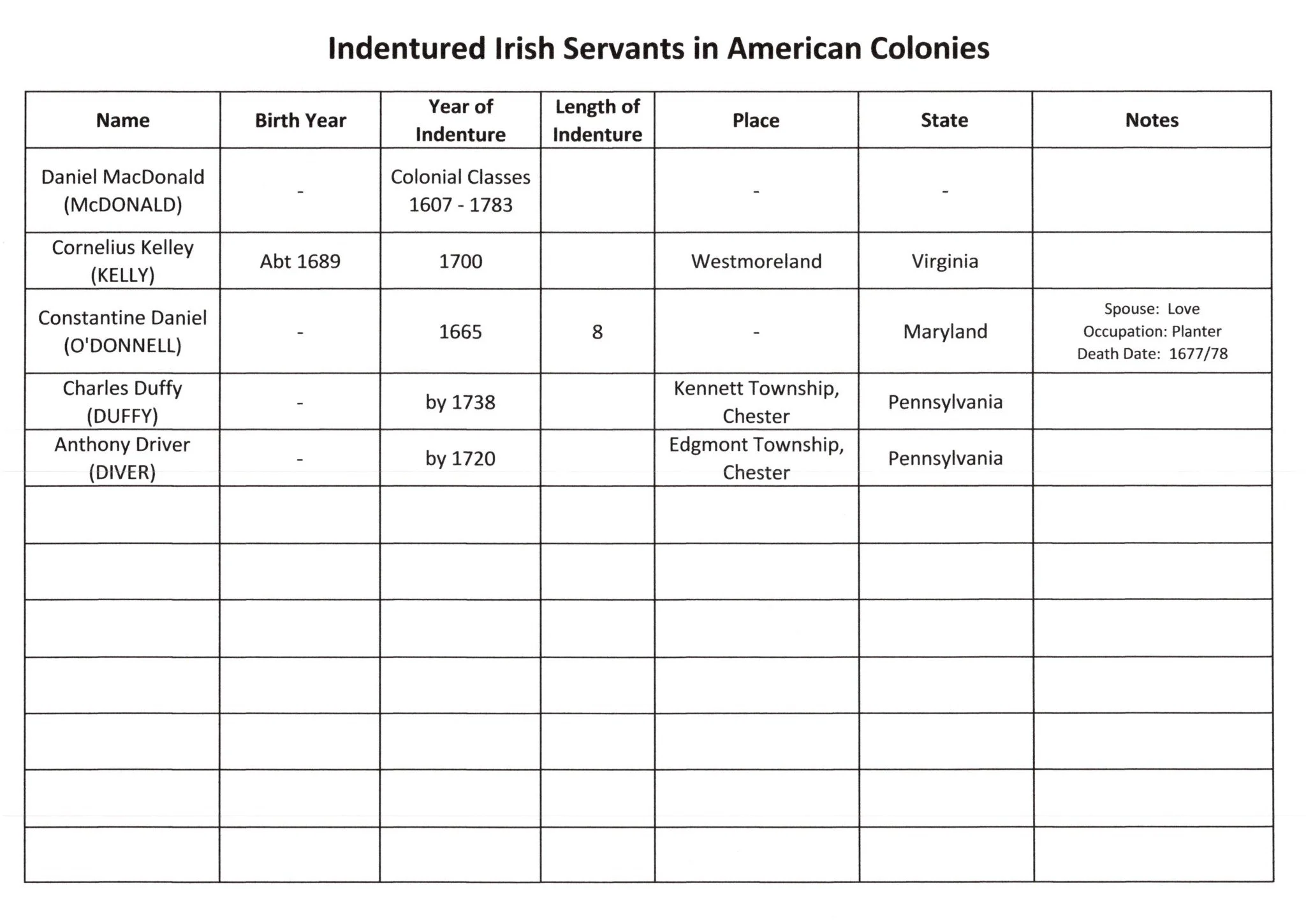
John O’Donnell’s research brings another set of names into this story. His supplied spreadsheet contains 31 entries, including names he grouped under Brennan, Canny, Devlin, Doherty and O’Doherty, Duffy, Diver, Kearney, Kelly, McDonald and O’Donnell. I am grateful to John for sharing this work.
The list includes Grace Canny and Urriah Canny, both recorded in Accomack, Virginia, in 1671, as well as Rose O’Daniel in Maryland and Mary Kelley in New Jersey. The list also records four years of indenture for James Donnell, six for Hugh O’Donnell and eight for Constantine Daniel. These details offer starting points for following individual lives through the colonial records.
The full list appears below, with the recorded names and John’s suggested surname variants retained. A familiar surname alone cannot establish an Inishowen birthplace, a family connection, or whether a person travelled voluntarily or was taken against their will. Each entry needs to be followed back to its original record. For Daniel MacDonald, the list gives only the broad description “Colonial Classes 1607 - 1783”, rather than a dated indenture.
An Urris story remembered in song
The Urris account was preserved in the Schools’ Collection of 1937 and 1938, when children recorded stories and traditions from older people in their communities.
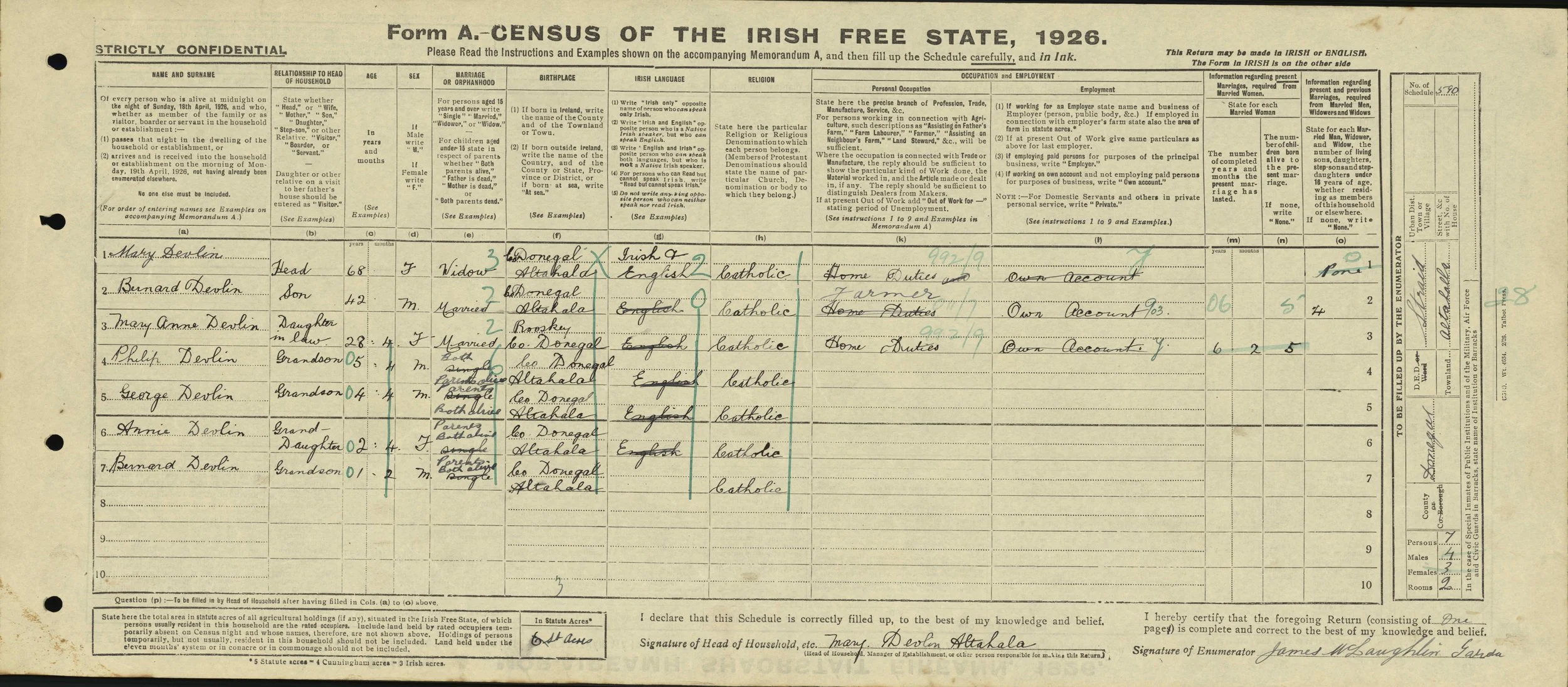
Brian Devlin of Altahalla, Clonmany, was thirteen when he wrote down a story told to him by his mother, Mary Anne. His account begins with the “Big Nights”, when neighbours gathered in houses for music, dancing and songs. Among those songs was one about a mother taken from Urris and the son who later went looking for her.
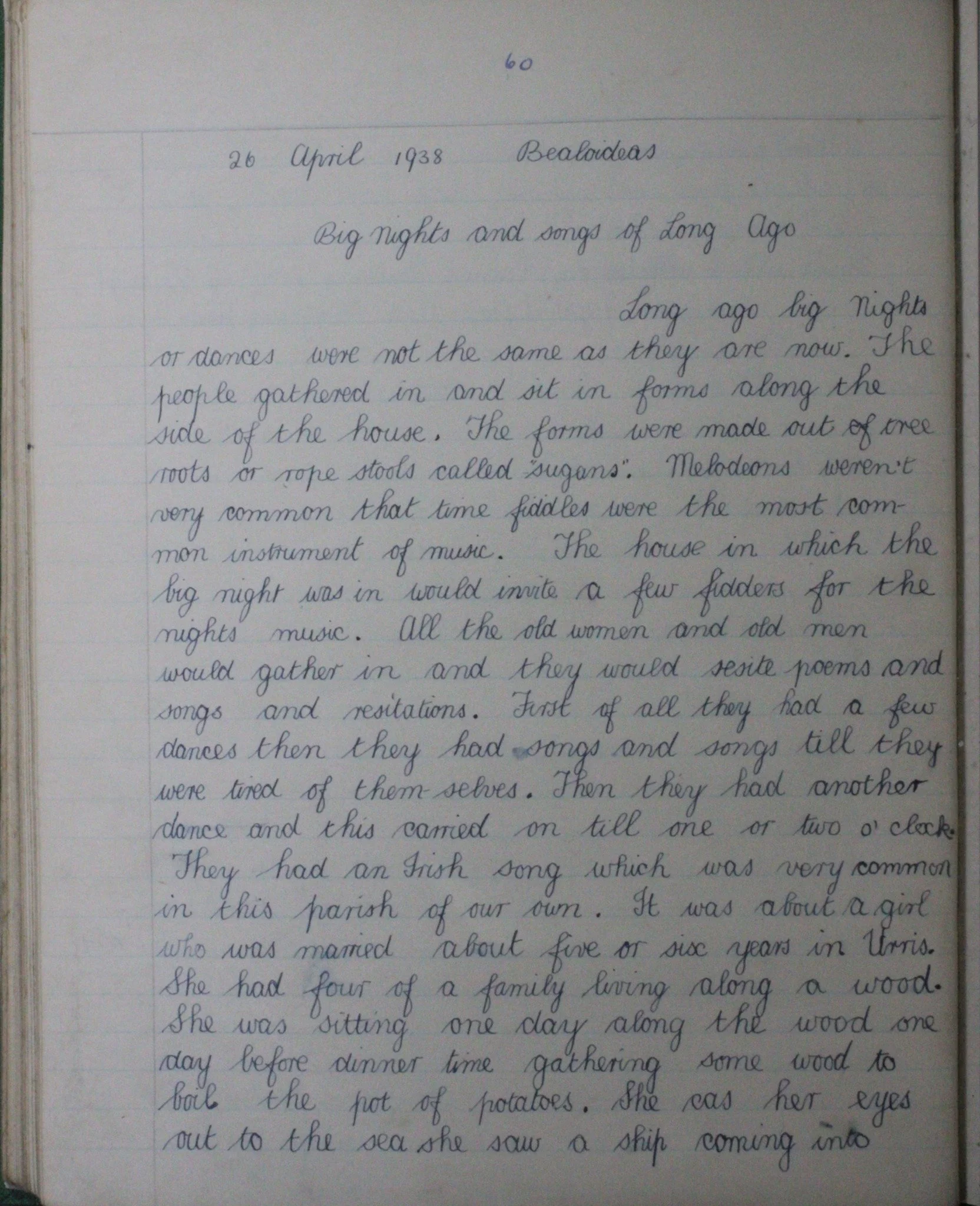
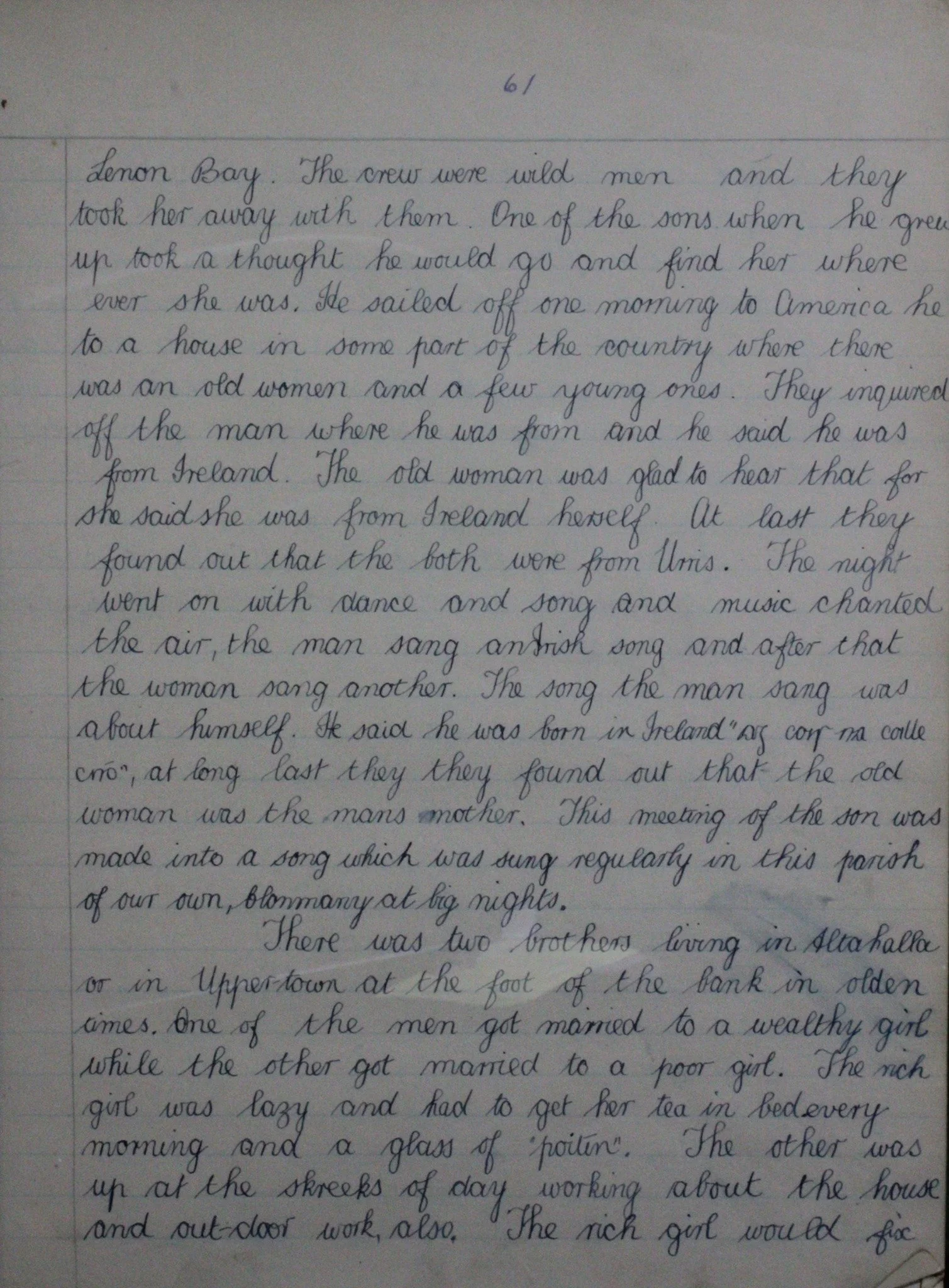
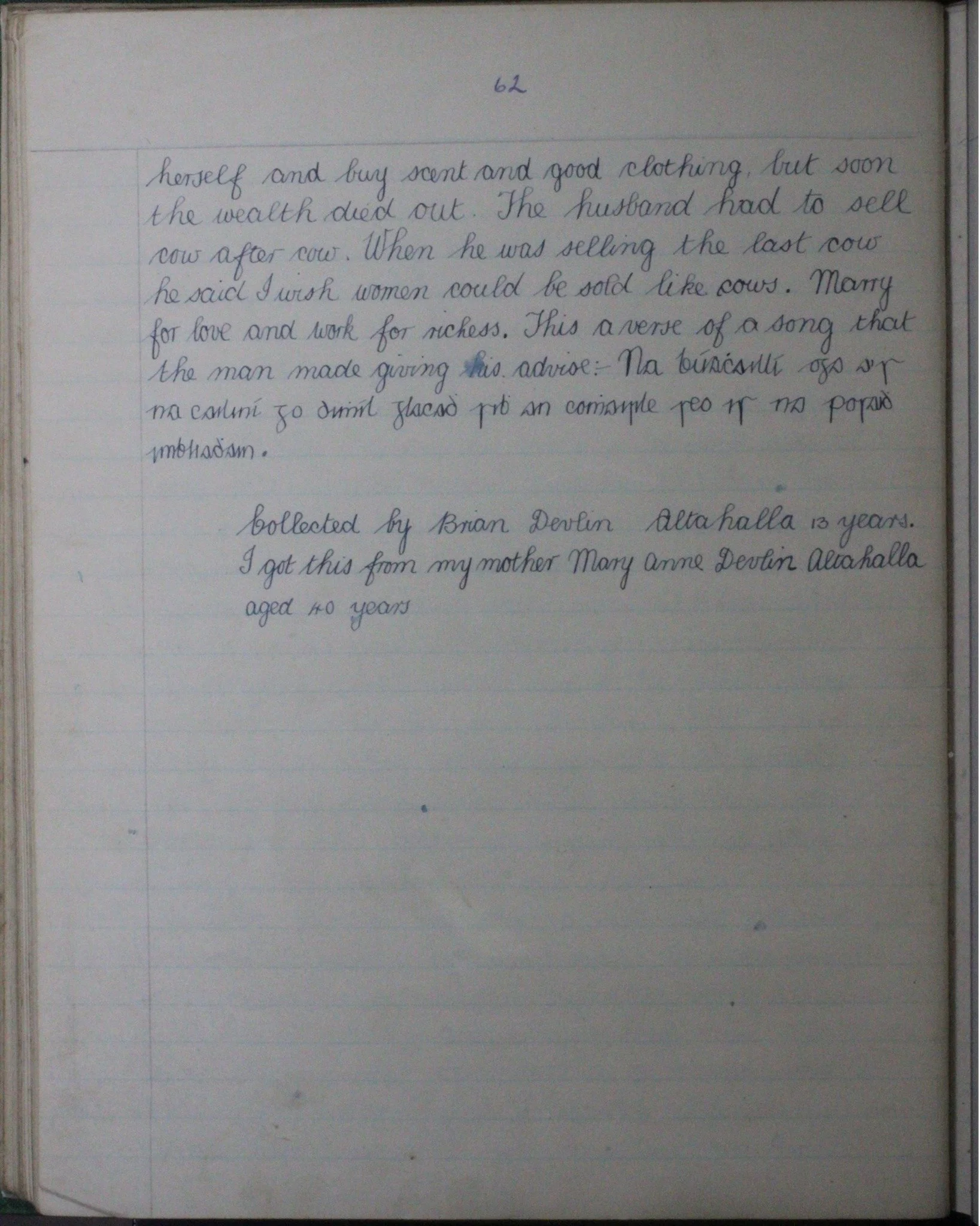
Here is Brian’s account:
Big Nights and Songs of Long Ago
Long ago, Big Nights or Dances were not the same as they are now. The people gathered in and sat on forms along the side of the house. The forms were made out of tree roots or rope stools called “sugans”.
Melodeons weren’t very common that time; fiddles were the most common instrument of music. The house in which the Big Night was in would invite a few fiddles for the night’s music. All the old women and old men would gather in and they would recite poems and songs and recitations. First of all, they had a few dances then they had songs and songs till they were tired of themselves. Then they had another dance, and this carried on till one or two o’clock.
They had an Irish song which was very common in this parish of our own. It was about a girl who was married five or six years in Urris. She had four of a family living along a wood. She was sitting one day along the wood to boil the pot of potatoes. She cast her eyes out to sea; she saw a ship coming into Lenan Bay. The crew were wild men and they took her away with them. One of the sons when he grew up took a thought he would go and find her wherever she was. He sailed off one morning to America. He (went) to a house in some part of the country where there was an old woman and a few young ones. They enquired of the man where he was from and he said he was from Ireland. The old woman was glad to hear that for she said she was from Ireland herself. At last they found out that they were both from Urris. That night went on with dance and song and music chanted (in) the air; the man sang an Irish song and after that the woman sang another. The song the man sang was about himself. He said he was born in Ireland “ag coir na coille cnó” (at the nut-wood wood). At long last they found out that the old woman was the man’s mother. This meeting of the son was made into a song which was sung regularly in this parish of our own, Clonmany, at Big Nights.
I got this from my mother, Mary Anne Devlin, Altahalla age 40 years
Collected by Brian Devlin age 13 years
Altahalla, Clonmany, Co. Donegal
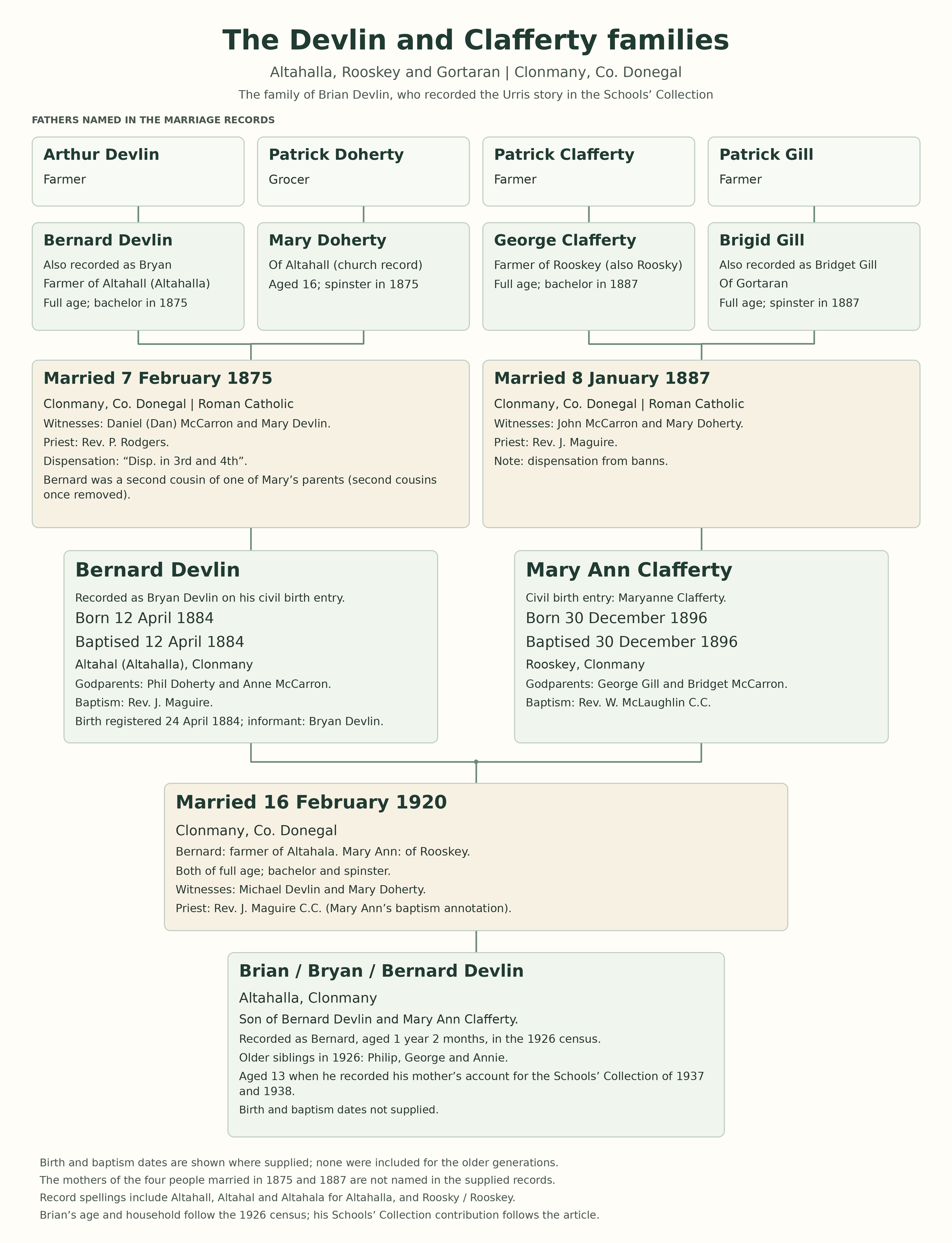
Son of Bernard Devlin and Mary Anne Clafferty
What stays with me is the part played by the songs. In the story, a mother and son discover who they are through words sung far from Urris. The song was then remembered at gatherings here in Clonmany, until Mary Anne told the story to Brian and he wrote it down.
We cannot yet put a name or a date to the woman’s experience, or independently confirm the kidnapping and reunion. What we can say is that this account formed part of the local tradition recorded in the Schools’ Collection. It deserves to be shared with that understanding, and with appreciation for the family who preserved it.
I would love to hear from anyone who remembers this story, knows the song, or recalls another version of it being told in Urris or elsewhere in Inishowen. Even a line of the Irish words, or the name of someone who used to sing it, might help us to learn a little more.
John O’Donnell’s list of Irish indentured servants
The following 31 entries reproduce the information in the supplied spreadsheet. Names in brackets are the surname identifications proposed in that list. “Abt” means approximately; “by” and “before” retain the limits stated in the research. A blank or dash indicates that a detail was not supplied.
The original workbook is titled List of Indentured Slaves. The entries are presented here as a list of indentured servants. That filename does not establish that every person in it experienced slavery or kidnapping.
| Name as supplied | Birth year | Year of indenture | Term in years | Place | Colony / state | Notes |
|---|---|---|---|---|---|---|
| John Keilly (KELLY) | Not stated | by 1785 | Not stated | Loudoun | Virginia | Irish |
| John Doughally (DOHERTY) | Abt 1684 | 1695 | Not stated | Westmoreland | Virginia | Not stated |
| John Dehoddey (DOHERTY) | Abt 1752 | by 1772 | Not stated | Northampton Forge, Baltimore | Maryland | Master: Captain Charles Ridgley |
| John Driver (DIVER) | Abt 1692 | 1731 | Not stated | Not stated | Maryland | Not stated |
| James Donnell (O'DONNELL) | Not stated | Abt 1741 | 4 | Not stated | Pennsylvania | Not stated |
| James Devlin (DEVLIN) | Not stated | by 1748 | Not stated | Newtown Township, Chester | Pennsylvania | Not stated |
| James Brannon (BRENNAN) | Abt 1733 | by 1753 | Not stated | Not stated | Maryland | Not stated |
| Hugh O'Donnell (O'DONNELL) | Not stated | 1745 | 6 | Not stated | Pennsylvania | Not stated |
| Hugh Doherty (DOHERTY) | Not stated | before 1678 | Not stated | Not stated | Montserrat | Not stated |
| Grace Canny (CANNY) | Abt 1655 | 1671 | Not stated | Accomack | Virginia | Not stated |
| Edward Daniel (O'DONNELL) | Not stated | before 1637 | Not stated | Not stated | Virginia | Not stated |
| Edward Brannican (BRENNAN) | Not stated | by 1707 | Not stated | Baltimore | Maryland | Not stated |
| Dennis Kelley (KELLY) | Abt 1680 | 1699 | Not stated | Lancaster | Virginia | Not stated |
| Urriah Canny (CANNY) | Abt 1659 | 1671 | Not stated | Accomack | Virginia | Not stated |
| Thomas Doughtie (DOHERTY) | Abt 1599 | 1625 | Not stated | Not stated | Virginia | Not stated |
| Terrance Devlin (DEVLIN) | Not stated | by 1749 | Not stated | Not stated | Pennsylvania | Perhaps an apprentice |
| Rose O'Daniel (O'DONNELL) | Not stated | by 1676 | Not stated | Somerset | Maryland | Not stated |
| Philip Duffy (DUFFY) | Not stated | by 1733 | Not stated | Lancaster | Virginia | Master: William Hutchins |
| Patrick Devin (DEVLIN) | Abt 1688 | by 1702 | Not stated | Northumberland | Virginia | Not stated |
| Patrick Carney (KEARNEY) | Abt 1681 | 1697 | Not stated | Lancaster | Virginia | Not stated |
| Neale O'Dorhoty (O'DOHERTY) | Not stated | 1676 | Not stated | Northumberland | Virginia | Not stated |
| Michael Kelley (KELLY) | Abt 1685 | 1700 | Not stated | Westmoreland | Virginia | Not stated |
| Michael Carney (KEARNEY) | Abt 1751 | by 1776 | Not stated | Near Annapolis | Maryland | Occupation: Shoemaker Master: John Griffith |
| Michael Brannen (BRENNAN) | Not stated | by 1767 | Not stated | Chester | Pennsylvania | Not stated |
| Mary Kelley (KELLY) | Abt 1732 | by 1752 | Not stated | Elizabeth Town | New Jersey | Master: Captain Jonathan Hampton |
| Mannos O'Daniel (O'DONNELL) | Not stated | by 1732 | Not stated | Malborough Township, Chester | Pennsylvania | Master: William Harper |
| Daniel MacDonald (McDONALD) | Not stated | Colonial Classes 1607 - 1783 | Not stated | Not stated | Not stated | Not stated |
| Cornelius Kelley (KELLY) | Abt 1689 | 1700 | Not stated | Westmoreland | Virginia | Not stated |
| Constantine Daniel (O'DONNELL) | Not stated | 1665 | 8 | Not stated | Maryland | Spouse: Love Occupation: Planter Death Date: 1677/78 |
| Charles Duffy (DUFFY) | Not stated | by 1738 | Not stated | Kennett Township, Chester | Pennsylvania | Not stated |
| Anthony Driver (DIVER) | Not stated | by 1720 | Not stated | Edgmont Township, Chester | Pennsylvania | Not stated |
View the three original list pages
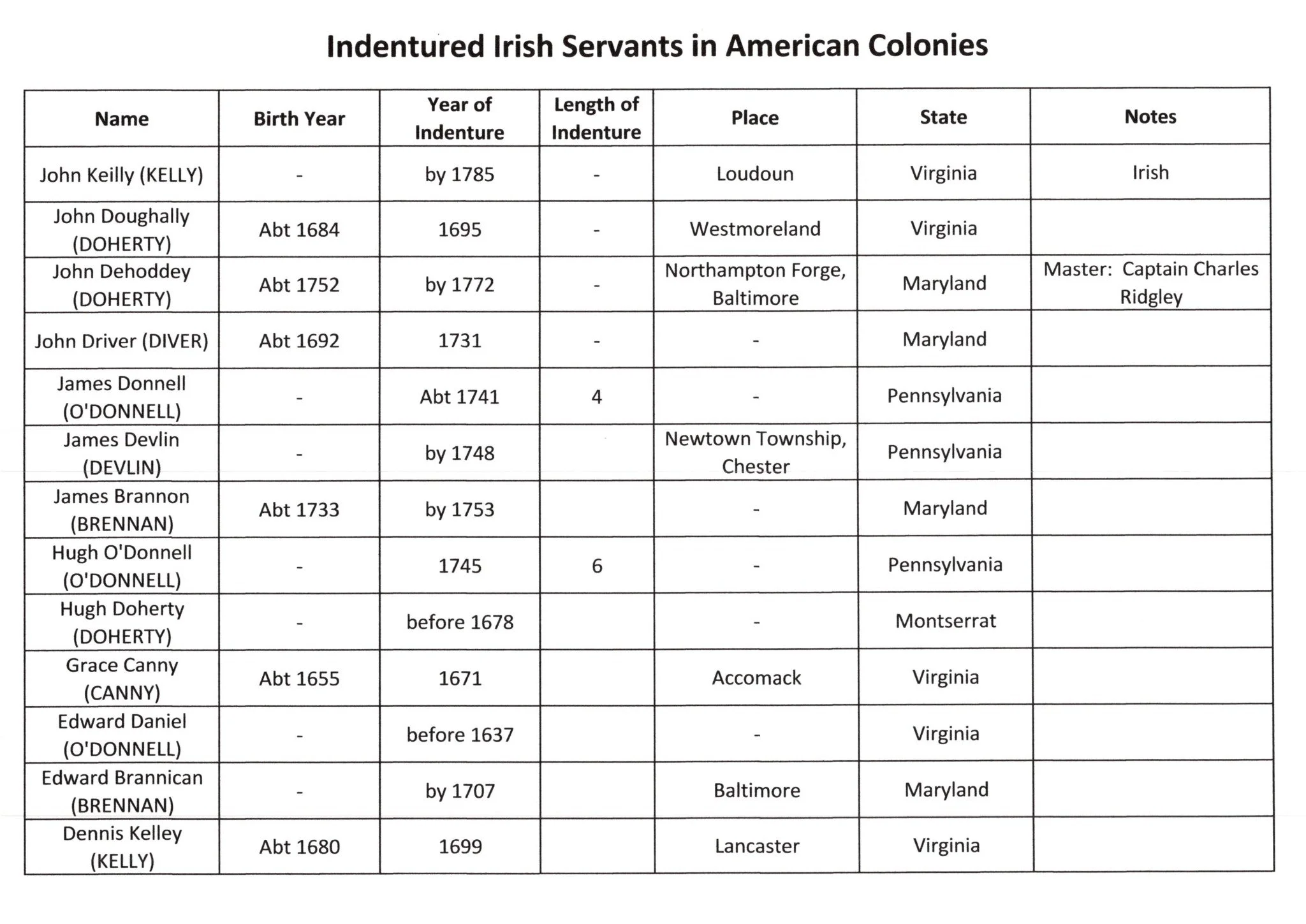
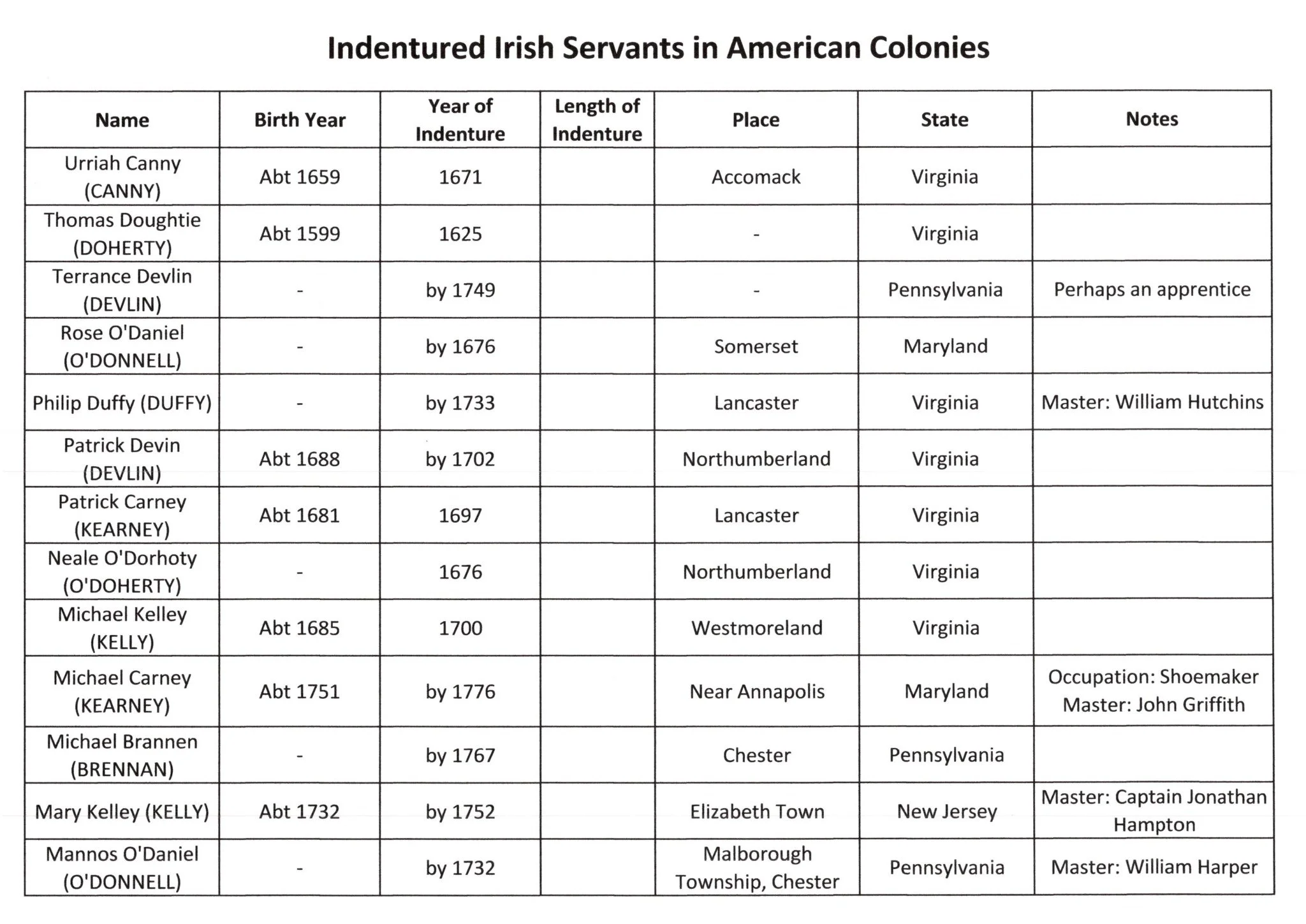
If you recognise a name in the list, or have already followed one of these people through the records, I would be very interested to hear what you have found.
If your family has connections with Inishowen and you would like help exploring them, you are welcome to get in touch through Irish Ancestral Group. I also arrange personally planned heritage visits for those who would like to see the places connected with their family history. Visit Irish Ancestral Group.
Landscape photographs © Jennifer McLaughlin-Doherty. Book cover, historical illustrations, maps, census and list images supplied with the research.
