
The Irish Diaspora:
A Worldwide Story with Local Roots
The Irish diaspora, known in Irish as Diaspóra na nGael, is the worldwide community of Irish emigrants and their descendants. Its story connects Ireland’s towns, villages and townlands with families and communities across the globe.
One island.
A world of connections.
Open a coloured label to discover the connection.
Ireland
Estimated emigrants since 1800. Before the Great Hunger, Ireland’s population was about 8.5 million. By 1891, almost 40% of living Irish-born people lived abroad.
Donegal · Derry & Moville · Dublin · Cobh · WaterfordUnited States
Residents reporting Irish ancestry in 2024. Approximately 4.5 million Irish immigrants arrived between 1820 and 1930. These are different measures and periods.
Boston · New York · Pennsylvania · MontanaCanada
Migration from Waterford and south-east Ireland helped shape communities with enduring Irish family and cultural connections, many established before the Great Hunger.
Waterford to NewfoundlandBritain
A shorter and generally more affordable journey brought Irish emigrants to Britain. Family connections grew across the Irish Sea.
Liverpool · GlasgowContinental Europe
Soldiers, families, priests and scholars established connections in France, Spain, the Low Countries and Italy. The Flight of the Earls was in 1607; the Wild Geese departure followed in 1691.
France · Spain / Cádiz · Low Countries · ItalyMontserrat
Irish connections survive in surnames, place names and St Patrick’s celebrations. The article also explores the island’s history of slavery and resistance, including the planned uprising of 1768.
CaribbeanArgentina
People with Irish ancestry, according to the estimate cited in the article. Community organisations, Irish dancing and Gaelic games reflect this continuing heritage.
South AmericaChile
Irish communities also developed in Chile. It is one of the destinations that shows how far this story extends beyond the best-known English-speaking countries.
South AmericaSouth Africa
South Africa is among the countries where Irish communities developed. The article describes a diaspora that continues to grow and change.
Southern AfricaGulf states
Irish societies and Gaelic games clubs in the Gulf states reflect more recent chapters of migration and community life. The marker indicates the region, rather than an individual country.
Arabian Gulf regionSingapore
Irish societies and Gaelic games clubs in Singapore are part of the diaspora’s continuing story, alongside communities with much older roots.
South-east AsiaAustralia
Irish emigrants and their descendants established communities in Australia, among the destinations reached during generations of migration from Ireland.
AustraliaNew Zealand
New Zealand is another part of the worldwide Irish story, connected through migration, family histories and cultural traditions.
New ZealandFigures describe different periods and measures, including ancestry, migration and local populations. They should not be added together. Locations and connecting lines are illustrative, rather than shipping routes.
People have been leaving Ireland since the Early Middle Ages, when monks, scholars and travellers established connections across Europe. Over the centuries, soldiers, merchants, labourers and families followed. An estimated ten million people have emigrated from the island since 1800, more than its estimated population of 8.5 million immediately before An Gorta Mór (The Great Hunger).
Behind these figures lie individual journeys. Some people left voluntarily, seeking employment, education or adventure. Others departed under pressure from war, dispossession, religious persecution or hunger. Together, their experiences created a diaspora whose reach extends far beyond the destinations most commonly associated with Irish emigration.

Exile, Soldiers and the Wild Geese
Long before the mass emigration of the nineteenth century, Irish people were establishing communities across continental Europe. Soldiers, displaced families, priests and scholars found opportunities and refuge in France, Spain, the Low Countries and Italy.
One of the most significant departures was the Flight of the Earls in 1607, when Hugh O’Neill, Earl of Tyrone, and Rory O’Donnell, Earl of Tyrconnell, left Rathmullan in County Donegal with relatives and followers. Their departure marked a turning point in the collapse of the old Gaelic political order. Although they hoped to secure support for a return, both earls spent their remaining years in exile.
Further departures followed the Cromwellian conquest of 1649 to 1653. Defeated Irish soldiers were permitted or pressured to leave for service in foreign armies, while confiscation and displacement uprooted families at home. Parliamentary authorities facilitated the recruitment and shipment of Irish troops into Spanish service, removing men they regarded as a threat to their control of Ireland. For many, military service overseas offered a livelihood when their prospects at home had been destroyed.
The Flight of the Wild Geese followed the Treaty of Limerick in 1691, when thousands of Irish Jacobite soldiers departed for France, many accompanied by their families. The name “Wild Geese” later became associated more broadly with Irish soldiers serving in continental European armies.
These military migrations helped establish Irish families abroad whose descendants sometimes retained their Irish surnames and identity for centuries.


Photograph: Mary McGuire. CC BY-SA 4.0.
When a Family Tree Opened Doors
For some Irish emigrants, ancestry had a practical purpose. A documented pedigree could help establish noble or gentlemanly status, supporting entry into prestigious military and naval careers in Spain. Family histories, heraldic certificates and supporting testimony could therefore become valuable credentials in a new country.
A striking example connects Inishowen with Cádiz in Spain. In the late eighteenth century, three Ó Dochartaigh brothers, descendants of Seán, a brother of Cahir Rua Ó Dochartaigh, the last Gaelic lord of Inishowen, went to Spain.
Their family pedigree was certified in 1790 by Sir Chichester Fortescue, Ulster King of Arms, helping establish their lineage for entry into Spanish naval service. The family became known there as O’Dogherty, and its naval connections continued through later generations.
Such histories also explain why evidence of an Irish family’s past may survive far from home, in overseas military archives, heraldic records and carefully preserved pedigrees.

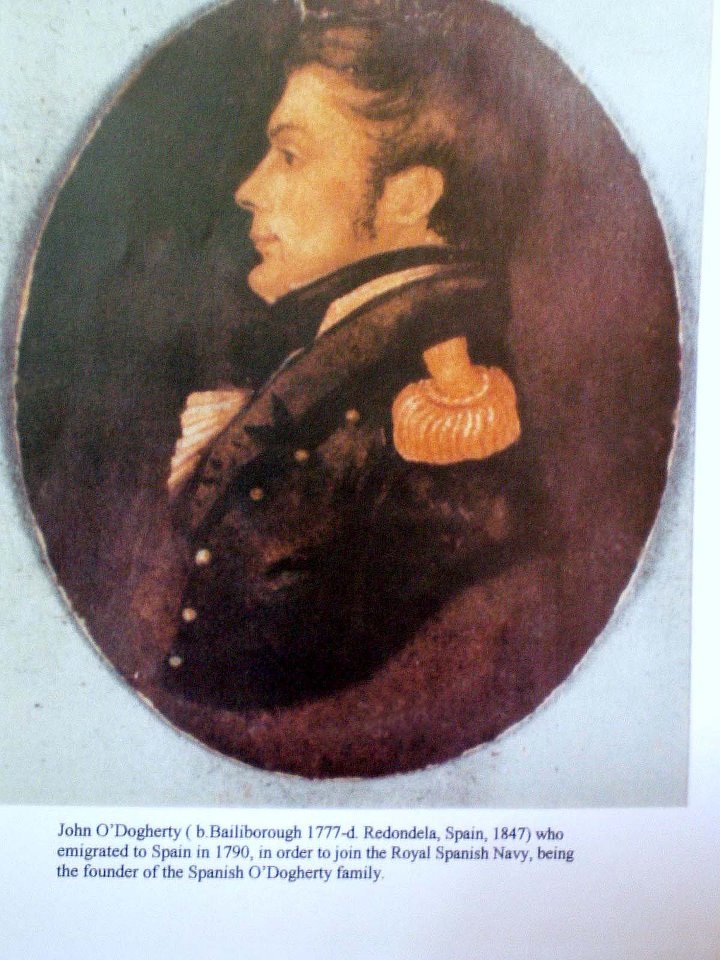
One of the most rewarding ways to explore these connections is to return to the places where the family story began. On a recent visit to Inishowen, the well-known Spanish actor and comedian Alex O’Dogherty and his partner, Ana, walked in the footsteps of John O’Dogherty (1777–1847). John was a direct descendant of a brother of Cahir Rua O’Dochartaigh, the last of the Irish-born O’Dochartaigh chieftains. Visiting places such as Burt Castle brought that long connection between Inishowen and Spain into the landscape around them.
Known to audiences across Spain for his work as an actor and comedian, Alex has also explored his Irish roots through documentary filmmaking. His documentary received its Irish premiere at the 2025 O’Dochartaigh Clann Reunion in Ireland, which I organised. Sharing that story with fellow members of the Clann gave a very personal expression to the wider history of emigration, family identity and return that continues to connect descendants with Inishowen today.

An Gorta Mór and Mass Emigration
Poverty, religious and political pressures, and the hope of better opportunities shaped generations of Irish migration. Emigration increased dramatically during An Gorta Mór (The Great Hunger), which began in 1845, and remained a defining feature of Irish life long afterwards.
By 1891, almost 40% of all living Irish-born people were living outside Ireland.
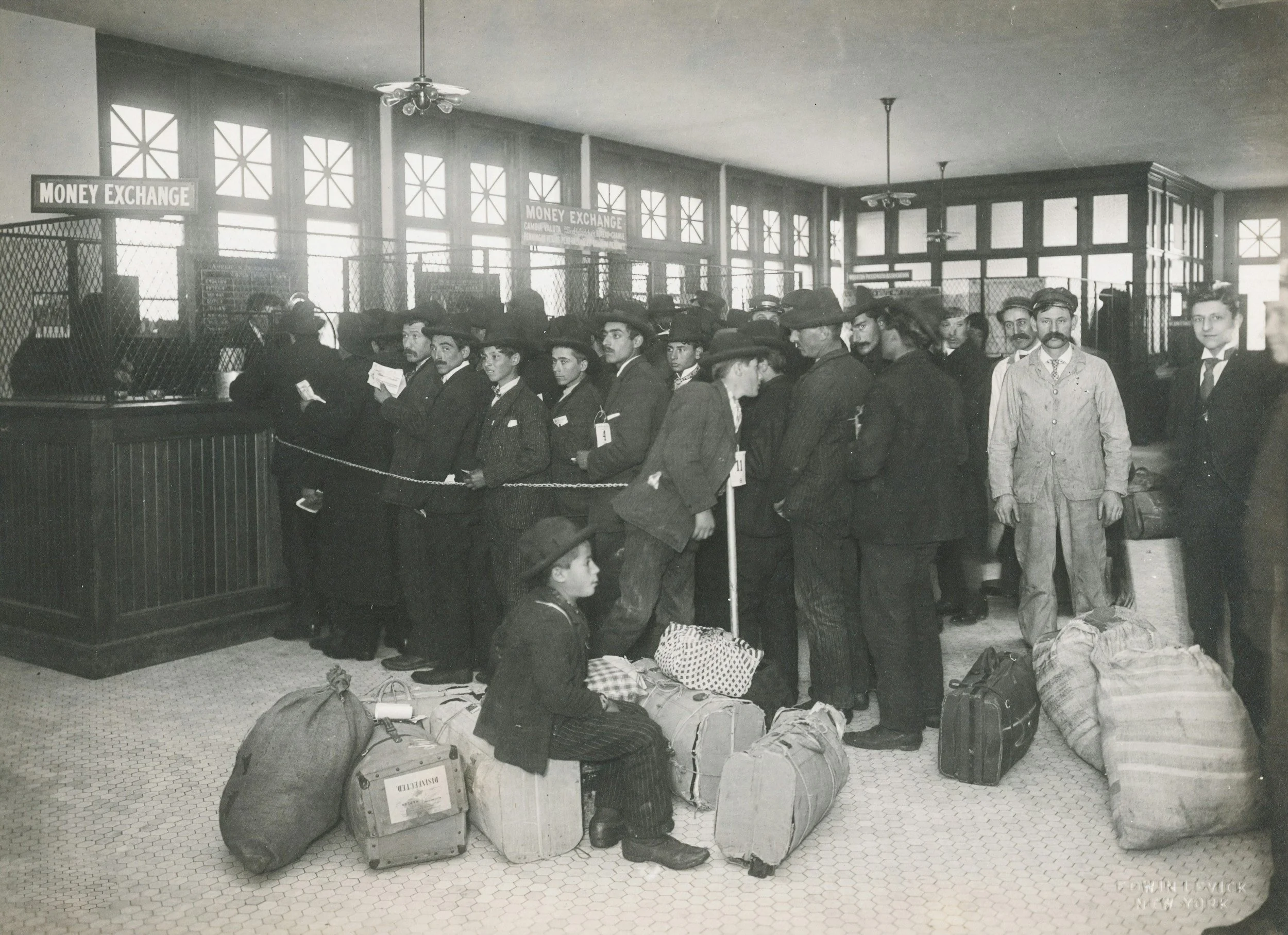
Britain offered a shorter and generally more affordable journey, with Irish communities growing in cities such as Liverpool and Glasgow. Others crossed the Atlantic or travelled to Australia, New Zealand and beyond. Approximately 4.5 million Irish immigrants arrived in the United States between 1820 and 1930.
Money and prepaid tickets sent home by relatives helped many more follow. These chains of migration linked particular Irish communities with destinations overseas. A single departure could become the beginning of a much larger family journey, as brothers, sisters, cousins and neighbours followed an established path.

Photograph: William Murphy. CC BY-SA 2.0.
Leaving Ireland’s Shores
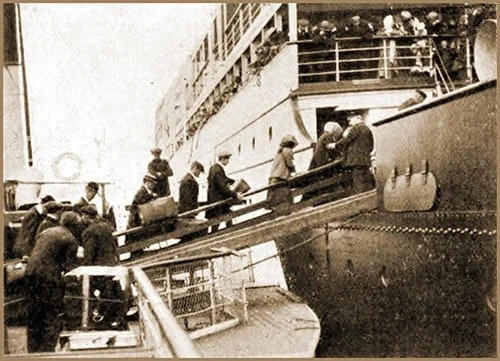
Ireland’s ports became gateways to new lives. Emigrants departed through Cork Harbour, Dublin, Belfast, Derry, Limerick, Sligo and Waterford, while many travelled first to Liverpool before continuing overseas.
Cobh, known as Queenstown between 1849 and 1920, became one of Ireland’s most important departure points. More than 2.5 million emigrants left through the port between 1848 and 1950.
In the north-west, Derry and the nearby anchorage at Moville, County Donegal, connected families with destinations across North America. These routes carried people of different faiths and backgrounds, including generations leaving Inishowen and the surrounding counties.
Waterford had particularly strong connections with Newfoundland, where seasonal work in the fisheries gradually developed into permanent family settlement.
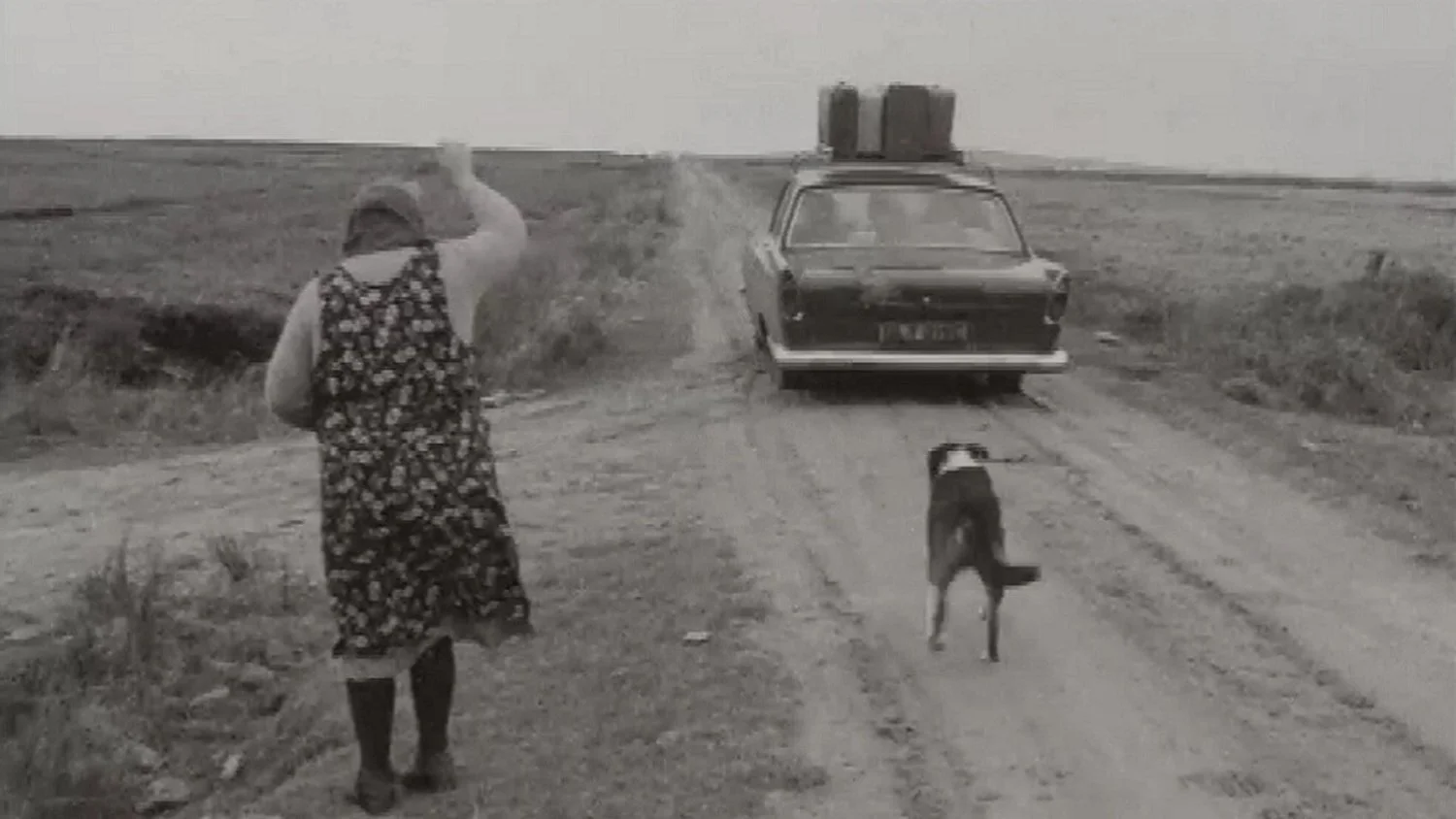
For many, departure meant a farewell with little prospect of returning. Yet the connection with home continued through letters, remittances, family stories and traditions passed from one generation to the next.

Photograph: Kenneth Allen / Geograph. CC BY-SA 2.0.

Photograph: Shannon LaBelle / Minnow. CC BY-SA 3.0.
An Irish Story Around the World
The diaspora reaches far beyond the familiar Irish neighbourhoods of Boston, New York, Liverpool and Glasgow. Irish communities also took root in places that may surprise those beginning to explore their heritage.
In Argentina, emigrants and their families established the largest community of Irish descendants outside the English-speaking world. Today, an estimated 500,000 people there have Irish ancestry, with that heritage reflected in community organisations, Irish dancing and Gaelic games.
In Newfoundland, Canada, migration from Waterford and south-east Ireland helped shape communities whose family histories and cultural traditions retain strong Irish connections. Many of these links began long before An Gorta Mór.
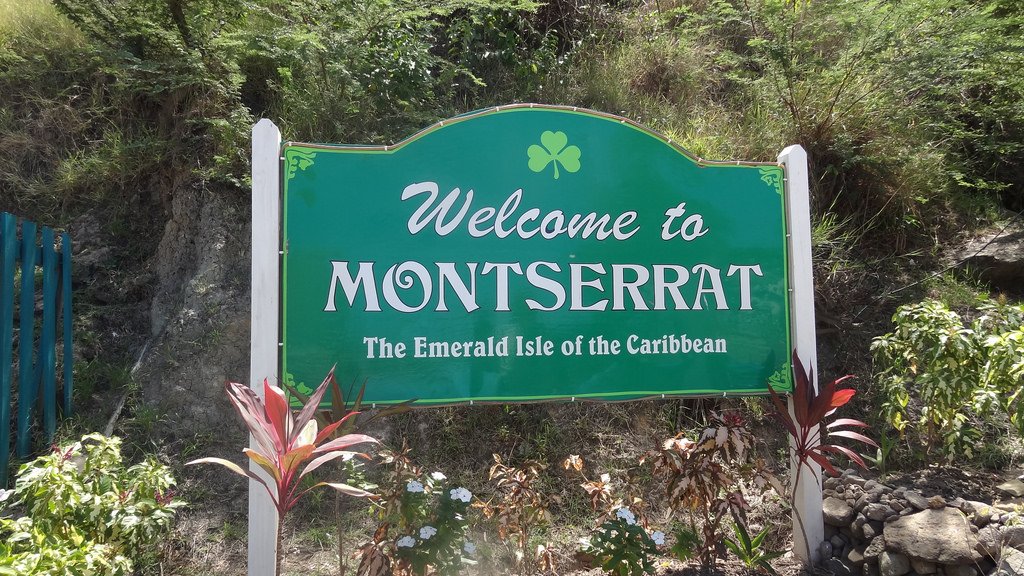
On the Caribbean island of Montserrat, Irish connections survive in surnames, place names and a distinctive St Patrick’s festival celebrating African and Irish heritage. This is a complex history, also shaped by colonial settlement, slavery and resistance. The island’s St Patrick’s commemorations remember a planned uprising by enslaved Africans in 1768 alongside its Irish connections.
Irish communities also developed in South Africa, Chile, Australia and New Zealand. Today, Irish societies and Gaelic games clubs in places such as Singapore and the Gulf states show how this story continues to grow and change.

From Donegal to America’s Mountain Communities
Some of the most revealing stories of the Irish diaspora are found far from the great ports and cities. In America’s mountain regions, Irish families established communities where familiar surnames, faith and family connections helped sustain a sense of belonging.
Loretto, Pennsylvania: A Russian Prince and an Irish Connection

Historic portrait. Public domain.
In the Allegheny Mountains, part of the Appalachian mountain system, the small community of Loretto has a remarkable history. Originally known as McGuire’s Settlement, it attracted Irish and German Catholic families in the late eighteenth century.
Its development became closely associated with Fr Demetrius Augustine Gallitzin, a Russian prince born in The Hague who converted to Catholicism in 1787. After travelling to America and becoming a priest, he took up permanent ministry at the settlement in 1799.
Gallitzin established St Michael’s Church and helped develop roads, farms, housing and sawmills. The settlement became known as Loretto, taking its name from the Marian shrine at Loreto in Italy. His ministry provided a permanent spiritual centre for families who had previously depended on occasional visits from travelling priests.
My own genealogical research uncovered a connection between this mountain community and a McGonigle family from Dunaff, Clonmany, County Donegal, whose emigration story reaches back almost 250 years. DNA connections helped establish the family’s link with Dunaff, while research into Loretto’s parish records revealed many other surnames familiar in Inishowen.
Those names offer intriguing clues to a wider story. Each entry records an individual or family, but together they raise questions about neighbours following neighbours, relatives helping relatives, and connections maintained across generations and an ocean. A familiar surname alone cannot establish a shared place of origin, but it can provide a valuable starting point for further investigation.
Loretto’s beginnings were rooted in farming and religious community life. Later, the surrounding Cambria County region became an important centre of coal mining, iron and steel production, drawing further generations of workers and families into Pennsylvania’s mountains.
Butte, Montana: Irish Life in the Copper Mountains
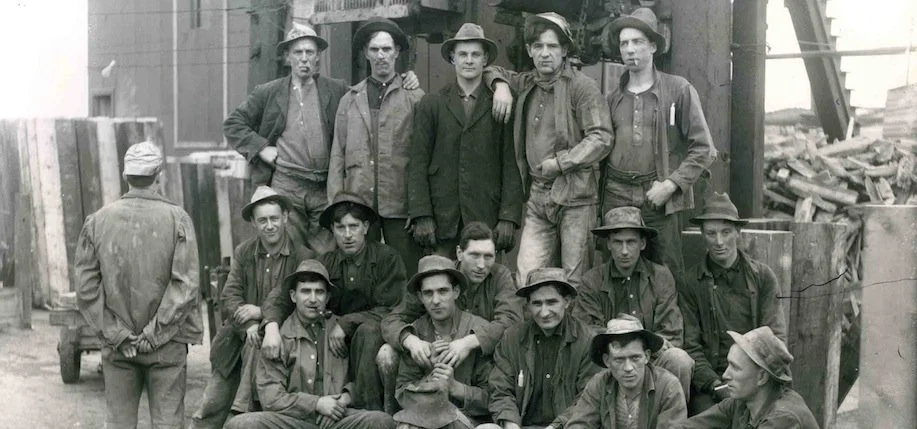
Farther west, Butte, Montana, became one of America’s most recognisably Irish mining communities. Its expanding mines attracted Irish workers and their families, who helped shape the town’s neighbourhoods, churches, trade unions and political life.
By 1900, first-generation Irish immigrants and their American-born children accounted for approximately 36% of the population of Silver Bow County, where Butte is located. Mining provided employment for a substantial proportion of that community.
The Irish connection has endured. A US Census Bureau article published in 2021 reported that 28.4% of Silver Bow County’s residents claimed Irish ancestry, more than one in four people.
Together, Loretto and Butte show how Irish communities took root well beyond the Atlantic coastline. Their histories connect mountain settlements, farms and mines with families whose journeys began in Irish towns, villages and townlands.
Connecting the Global Story with Your Own
An estimated 80 million people worldwide have Irish ancestry. This is a broad estimate rather than a worldwide census count. In the United States alone, 32.4 million residents reported Irish ancestry in 2024.
These figures describe many different kinds of connection, from people born in Ireland to descendants whose ancestors left centuries ago. Across that diversity, family stories, surnames, music, traditions and a sense of attachment continue to connect people with Ireland.
For those exploring their Irish heritage, that worldwide story becomes personal. It may begin with a surname, an old photograph, a letter or a half-remembered place name. Following those clues can reconnect a family’s journey abroad with the people, places and communities where it began.
References
Glynn, I. (2012) ‘Irish Emigration History’. Émigré Project. University College Cork.
President of Ireland (2012) ‘Reflecting on An Gorta Mór, the Great Famine of Ireland’. Address discussing the pre-1845 population and subsequent emigration.
Ask About Ireland (n.d.) ‘The Flight of the Earls 1607’, ‘Taking Flight’ and ‘The Route to Rome’. History of Ireland.
Ó Siochrú, M. (2008) ‘“Shipped for the Barbadoes”: Cromwell and Irish migration to the Caribbean’. History Ireland, 16(5).
Royal Irish Regiment (n.d.) ‘The Flight of the Wild Geese’. Virtual Military Gallery.
Pérez Tostado, I. and García Hernán, E. (eds) (2010) Ireland and the Spanish Empire, 1600– 1825. Dublin: Four Courts Press.
Carrickabraghy Castle (n.d.) ‘Ó Docharthaigh: O’Doherty’. Historical account of the Inishowen family and its Spanish descendants.
O’Hart, J. (1892) ‘Doherty (No. 1): Lords of Inishowen’. Irish Pedigrees; or, The Origin and Stem of the Irish Nation. 5th edn, vol. 1.
O’Dogherty, L. (2017) ‘O’Dochartaigh in Spain since 1790’. Family account of the brothers’ ancestry and Spanish naval connections.
Walsh, B. M. (1994) Wage Convergence and Integrated Labour Markets: Ireland and Britain, 1841–1991. UCD Centre for Economic Research Working Paper WP94/6. Dublin: University College Dublin.
Library of Congress (n.d.) ‘Irish-Catholic Immigration to America’. Immigration and Relocation in U.S. History.
Cobh Heritage Centre (n.d.) ‘Stories’ and ‘Cobh: Past & Present’. Historical accounts of emigration through Cork Harbour.
Mitchell, B. (2022) ‘The story of emigration from Derry in the age of sail and steam’, parts 1 and 2. Derry Journal.
Newfoundland and Labrador Heritage Website (n.d.) ‘The Irish in Newfoundland’, ‘Irish Migration’ and ‘Creed and Culture, 1784–1830’. Memorial University of Newfoundland.
Department of Foreign Affairs, Ireland (n.d.) ‘Ireland’s Relationship with Argentina’. Ireland.ie.
Government of Montserrat (2024) ‘St. Patrick’s Day Message by Premier, Hon. Joseph E. Farrell’, 18 March.
Montserrat Tourism Authority (n.d.) ‘Montserrat History’ and ‘Festivals & Events’.
Department of Foreign Affairs, Ireland (2025) Rest of World Diaspora Directory. Supplemented by country profiles for South Africa, Chile and New Zealand, Ireland.ie.
Roman Catholic Diocese of Altoona-Johnstown (n.d.) ‘Demetrius Gallitzin’ and ‘Diocesan History’.
Kittell, F. (comp.) (1899) Souvenir of Loretto Centenary, October 10, 1899: 1799–1899. Cresson, Pennsylvania: Swope Bros. Especially the matrimonial and baptismal records from p. 93, register of deaths from p. 165, and parish census, pp. 291–307.
McLaughlin-Doherty, J. (unpublished research) McGonigle family of Dunaff, Clonmany, County Donegal, and connections with Loretto, Pennsylvania. Author’s genealogical research and analysis of DNA connections.
Coleman, J. F. (1986) ‘Cambria County: Coming Full Circle’. Pennsylvania Heritage, Winter.
National Park Service (n.d.) Labor History in the United States: A National Historic Landmarks Theme Study. Discussion of Irish workers in Butte and Silver Bow County.
Moore, D., Vasquez, G. and Dolan, R. (2021) ‘Residents With Irish Ancestry Are in All 3,142 U.S. Counties and Make Up 20% of the Population in Some’. America Counts, United States Census Bureau, 16 March.
Department of Foreign Affairs, Ireland (n.d.) ‘Global Irish Hub’. Ireland.ie. Worldwide Irish ancestry estimate.
United States Census Bureau (2026) ‘Irish-American Heritage Month and St. Patrick’s Day: March 2026’. Based on the 2024 American Community Survey one-year estimates.
Online sources consulted 20 October 2026. Historical population and migration totals are estimates; ancestry figures reflect the definitions and reporting methods of the sources concerned.